

Quick Summary
Properly designed air delivery pathways are essential for maintaining correct system pressure, minimizing energy waste, and ensuring uniform thermal comfort. This comprehensive guide covers strategic routing layouts, sizing equations, and airtight sealing methods that prevent expensive mechanical drag. Upgrading compromised, legacy conduits protects sensitive cooling machinery from premature wear, controls indoor humidity levels, and maximizes monthly utility savings.
An efficient HVAC system depends heavily on the quality of its air distribution network. Improperly designed or poorly installed ducts can create airflow restrictions, uneven cooling, excessive humidity, and rising energy costs throughout a property.
This air duct installation guide explains how professional duct layouts support balanced pressure, thermal efficiency, and long-term mechanical reliability. Understanding the installation process helps homeowners recognize why properly engineered duct systems are among the most important structural components inside a climate-controlled home.
The Engineering Behind Residential Airflow Systems
A central climate control system relies entirely on a balanced network of channels to transport conditioned air smoothly throughout a property’s floor plan. Homeowners often focus their attention on high-profile mechanical upgrades like variable-speed compressors or advanced smart thermostats when trying to reduce their power bills.
However, the hidden infrastructure that moves the air remains the true backbone of household efficiency and environmental control. Following our accurate, professional air duct guide allows property owners to understand the subtle mechanical principles required to achieve optimal system performance.
Forced-air layouts function as a precise closed-loop pressurized system, demanding a balance between the air pulled into the system and the air pushed out. If the delivery lines are poorly configured, undersized, or leaky, the entire climate control loop undergoes structural strain.
This imbalance forces expensive blower motors to work significantly harder, accelerating component fatigue and driving up monthly utility costs. To establish long-term reliability, every installation must prioritize balanced volume delivery and minimal kinetic friction.
Structural Load Calculations and Sizing Equations
Before a single section of conduit is secured in place, layout designers must execute structural thermal load calculations for the property. Sizing a distribution network based on guesswork or simply matching the footprint of an old system inevitably leads to operational inefficiencies. Each individual room requires a specific volume of air, measured in cubic feet per minute, to offset its unique thermal heat gains.
Larger living spaces with expansive south-facing windows demand a significantly higher volume of conditioned air than compact, interior hallways. If a branch line is engineered too small, the room becomes a chronic hot zone because it is physically starved of the necessary thermal exchange.
Conversely, oversized lines drop air velocity below functional limits, preventing the conditioned air from mixing properly within the living zone. Accurate sizing during air duct replacement in Florida ensures that the volumetric delivery perfectly matches the capacity of the main climate control equipment.
External Static Pressure
Static pressure represents the structural resistance that a blower motor must overcome to push air through the delivery pathways. Maintaining this pressure within strict manufacturer specifications is absolutely critical for the health of the entire HVAC system. When a network is constructed with restrictive paths, sharp turns, or undersized trunks, the static pressure climbs dangerously high.
This high pressure acts as an invisible barrier, choking the air handler and drastically reducing the volume of passing air. Over time, high static pressure causes the indoor evaporator coil to drop below freezing temperatures, turning condensate into solid ice and halting the cooling cycle entirely. Maintaining a smooth path with gradual transitions keeps static pressure perfectly balanced, shielding high-cost internal parts from early failure.
Supply and Return Plenum Configuration
The supply plenum is the primary distribution chamber attached directly to the output of the indoor air handler. This chamber collects the freshly conditioned air and directs it into the main trunk lines that feed individual rooms. To maintain uniform pressure, the plenum must be constructed with ample volume and lined with high-quality, non-porous insulation.
Equally important is the return plenum, which gathers stale air from the home and draws it back through filtration media for reconditioning. If the return plenum is restricted or poorly sealed, the system experiences a form of volumetric starvation, lowering thermal transfer efficiency. Properly aligning these two primary chambers establishes a stable pressure baseline for all connected branches.
Main Trunk and Branch Layout Methodologies
System engineers generally utilize the reducing-extended plenum design, which features a large central trunk line that steps down in size as it runs further from the air handler. This gradual reduction in trunk volume is necessary to maintain a consistent velocity as air is diverted into individual room runouts. If the main trunk maintained a uniform size throughout its entire run, air pressure would drop off precipitously before reaching the furthest registers.
Individual branch lines connect to the main trunk via specialized take-off fittings designed to scoop air smoothly from the main current. These branch lines should follow the most direct route possible to minimize friction losses. Avoiding unnecessary loops and bends in these secondary runs ensures that distant rooms receive the exact same cooling performance as areas located right next to the utility closet.
Transition Fittings and Friction Loss Management
Every bend, tee, and register boot introduces a measurable amount of dynamic friction into the moving stream of air. In airflow engineering, these physical disruptions are calculated as equivalent lengths of straight pipe to assess their total impact on system performance. For instance, a sharp, un-vaned ninety-degree elbow can add the same resistance as dozens of feet of straight conduit.
To mitigate this friction loss, modern installation standards dictate the use of long-radius elbows and smooth, sweeping transition fittings. Incorporating turning vanes inside wide sheet metal bends helps guide the air smoothly around corners without creating turbulent eddies. Minimizing internal turbulence allows the air handler to distribute comfort quietly and with minimal electrical demand.
Materials Engineering in Modern Air Delivery Systems
The specific materials selected for a distribution layout heavily dictate the system’s longevity, acoustic properties, and overall thermal efficiency. Traditional installations from past decades frequently relied on rigid fiberglass ductboard or early-generation flexible lines that degrade over time. Modern infrastructure projects utilize advanced, multi-layered materials engineered to withstand intense environmental pressures.
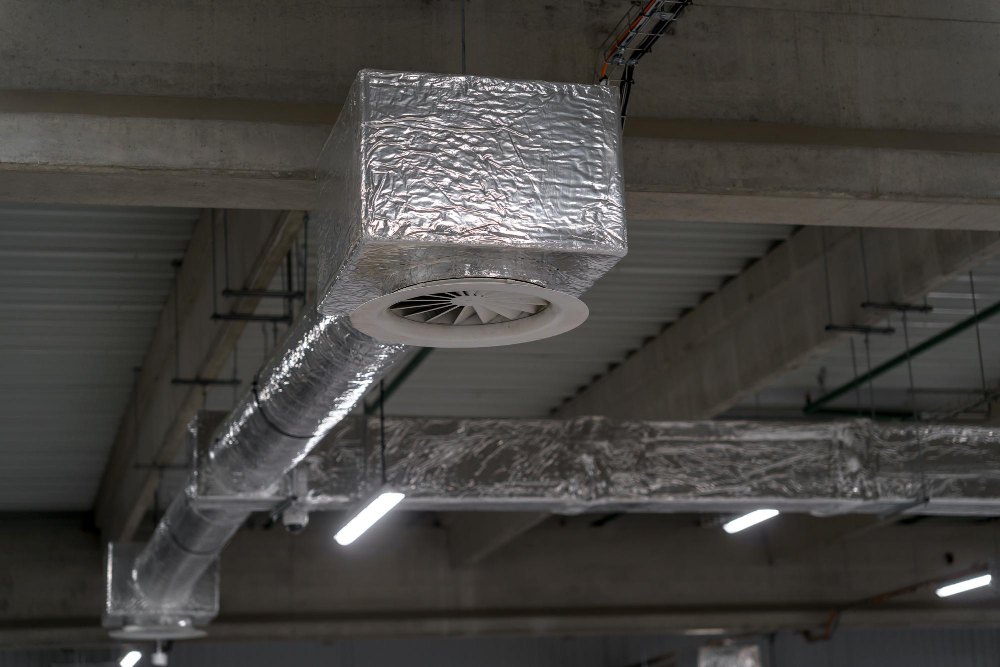
Galvanized sheet metal is the gold standard for main trunk lines due to its incredible structural durability and low resistance to passing air. These rigid metallic paths do not sag, are completely impervious to pest damage, and can be thoroughly cleaned and sanitized over decades of continuous use. When wrapped in thick external insulation, sheet metal trunks offer unmatched thermal protection and reliable long-term pressure management.
Strategic Guidelines for Peak System Optimization
Achieving maximum efficiency from a new air delivery layout requires a combination of smart physical placement and regular care. Property owners should incorporate these vital operational habits to protect their infrastructure and maintain ideal air balancing:
- Keep all interior supply vents and large return grilles completely clear of heavy furniture, rugs, or drapes to maintain the designed airflow velocities.
- Replace standard filtration media on a strict monthly schedule to prevent restrictive dirt buildup from increasing system static pressure.
- Check the condition of visible connection points in mechanical rooms annually for signs of dark dust tracking, which signals an active air leak.
- Schedule routine professional inspections to ensure attic support straps remain secure and free from physical shifts or seasonal storm damage.
Sealing and Thermal Insulation
An unsealed ventilation network acts like a bucket riddled with small holes, letting conditioned air bleed out before it reaches the living spaces. Traditional cloth-backed duct tapes dry out, lose their adhesion, and fail completely within just a few years of installation.
Contemporary code standards mandate the use of heavy-duty, fiber-reinforced mastic sealants combined with foil-faced tapes. Applying liquid masticant thickly over every single joint, seam, and mechanical fastener creates a truly airtight, monolithic bond. Once the sealant cures, it remains flexible enough to expand and contract with seasonal temperature changes without cracking.
Sealing the entire network to a zero-leakage standard ensures that every cubic foot of air paid for on the monthly utility bill is delivered exactly where it is needed.
Following the sealing process, the entire exterior surface of the distribution network must be wrapped in high-R-value thermal insulation. In unconditioned areas like attics or deep crawlspaces, temperatures can easily skyrocket past one hundred and thirty degrees.
Thick insulation blankets prevent this extreme ambient heat from transferring into the cold airstream. Air leaving the coils at fifty-five degrees therefore arrives at the supply vent at virtually the same crisp temperature.
Minimizing Moisture Infiltration and Managing Latent Loads
In regions prone to high humidity, a compromised or poorly sealed ventilation network is a major entry point for ambient moisture. Negative pressure inside return lines can pull damp, unconditioned air from crawlspaces or attics straight into the main air stream through tiny seam failures. This continuous influx of latent moisture overwhelms the cooling system, forcing it to expend its energy stripping water vapor from the air rather than dropping the sensible room temperature.
This heavy moisture load leaves interior spaces feeling sticky and humid, tempting occupants to turn the thermostat down even lower. Sealing the entire air loop using this expert HVAC ductwork installation guide completely halts this moisture migration. This structural correction allows the cooling unit to manage indoor humidity effortlessly, establishing a crisp, dry indoor environment at a much higher and more efficient thermostat setting.
Air Quality Control Environmental, Inc. specializes in delivering precise, high-performance duct design, structural restoration, and complete layout installations that maximize mechanical output. We evaluate the unique layout of your property to install custom-tailored, fully optimized delivery paths that restore correct system pressure, lower energy demand, and ensure your system runs smoothly.
Restoring Complete Environmental Comfort Control
Living in a property with failing ducts creates a constant source of daily frustration. Remediation systematically eliminates these variables, returning control over the interior environment to the property owner. To begin optimizing your home infrastructure, reach out to our team to schedule a professional duct inspection today.